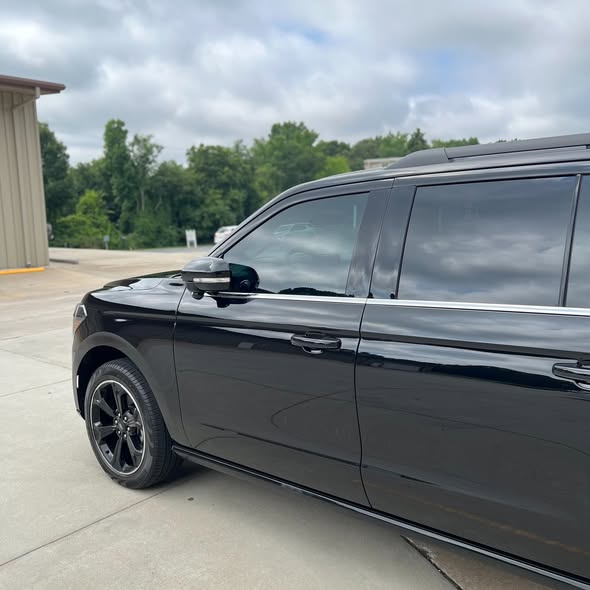
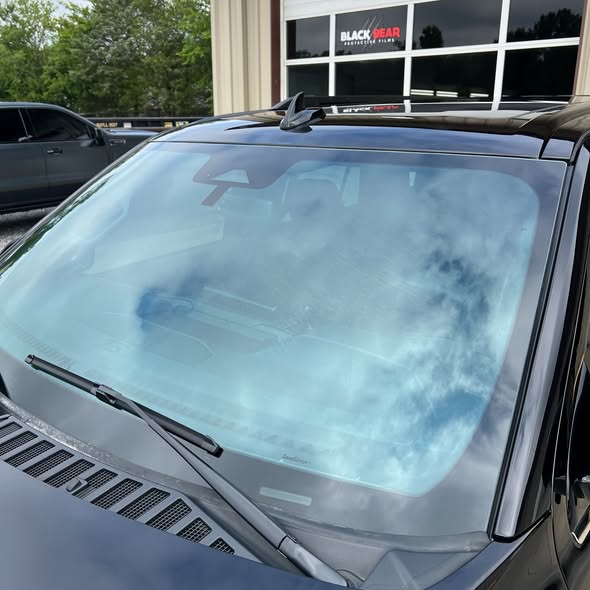
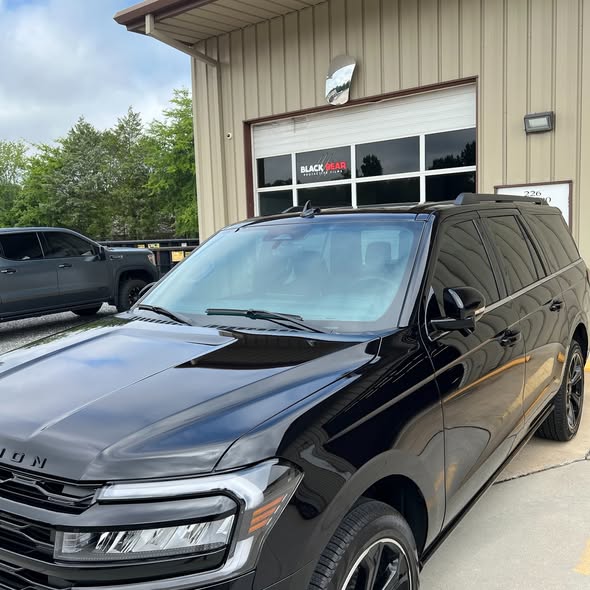
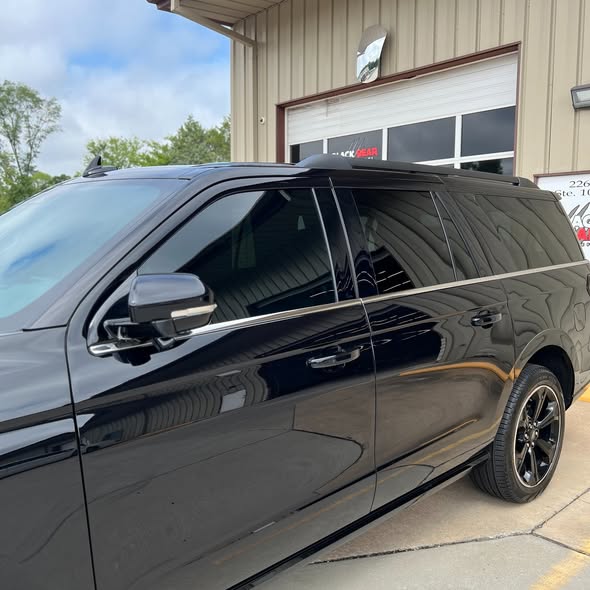
This Lincoln Navigator came into our shop with a straightforward goal: cut the glare, reject as much heat as possible, and keep that clean, blacked-out look. We recommended the 3M Ceramic IR Series, and once the job was done, the owner could not have been happier.
Vehicle: Lincoln Navigator
Service: Automotive Window Tint
Film Used: 3M Ceramic IR Series
Windshield: 70% VLT (very light tint, maximum heat rejection with full visibility)
All Other Windows: 15% VLT (deep, dark tint with privacy and heat blocking)
Location: Indian Land, SC
Installer: Black Bear Protective Films
Goal: Reduce light glare and achieve maximum heat rejection throughout the cabin
The Lincoln Navigator is a big, luxury full-size SUV with a large glass area. That means more sunlight enters the cabin, more heat builds up, and more glare hits the driver and passengers. The owner noticed this on long drives and wanted a real solution, not just a darker window.
That distinction mattered a lot for this project. The owner wanted a legal, clear-looking film on the windshield that would still reject heat at a high level. We suggested the 70% VLT on the windshield for exactly that reason. It is barely noticeable to the eye, keeps the forward view perfectly clear, and still delivers serious infrared heat rejection. Then on all the side and rear windows, the 15% VLT delivers that deep, rich, blacked-out appearance that suits a Navigator perfectly.
Glare was the other big concern. South Carolina summers are intense, and afternoon light pouring through the side windows makes every drive uncomfortable. The 3M Ceramic IR film blocks a high percentage of the sun’s visible light and infrared energy simultaneously, so the cabin stays cooler, glare is dramatically reduced, and the whole experience of being inside the vehicle changes for the better.
The Lincoln Navigator has some of the largest glass panels you will find on any production SUV. The windshield is wide and steeply raked, the rear quarter windows are deep, and the third-row glass adds even more surface area. Getting a clean, bubble-free result across all of that glass takes experience, precision, and the right preparation. Here is exactly how our team handled this project.
The conversation started simply. The owner came in frustrated with glare and heat and wanted to know what their options were. We walked them through the difference between dyed, carbon, and ceramic films, explained how infrared rejection works, and why the 3M Ceramic IR Series would address both concerns directly.
Once we confirmed the 3M Ceramic IR as the right film, we discussed the VLT levels for each zone. 70% on the windshield keeps legal compliance, preserves full forward visibility, and still delivers the ceramic IR heat blocking the owner wanted. 15% on all side and rear windows gives the deep privacy tint that matches the Navigator’s blacked-out exterior trim and wheels.
Before any film goes on, every window goes through a thorough cleaning process. On a vehicle this size, that means taking extra time on each panel.
Our team cleaned every window with an ammonia-free glass cleaner to break down oils, fingerprints, and any residue from the factory glass treatment. We then used a fine-grade clay bar process on the glass surfaces to remove bonded contaminants that a standard wipe-down leaves behind. All window channels and rubber seals around each glass panel were blown out with compressed air to prevent debris from working its way under the film edge after installation.
This step is the difference between a tint job that looks perfect on day one and one that keeps looking perfect years later.
The Navigator’s windshield is a large, curved piece of glass with a complex shape around the edges. We used computer-plotted templates specific to the Lincoln Navigator to pre-cut the windshield film. Precise digital templates eliminate guesswork, avoid wasteful cuts, and ensure the film seats correctly against the edges and around the rearview mirror mount without gaps or missed coverage.
The side and rear windows were cut using a combination of plotter templates and hands-on fitting to account for any gap around the seals. Each piece was labeled, staged cleanly, and kept dust-free before going onto the glass.
Application started with the windshield. We used a wet application method with a slip solution that allows the film to be positioned precisely before committing to final placement. Working from the centerline outward, the film was squeegeed down in smooth, overlapping passes to push all solution and air uniformly toward the edges.
The curved geometry of the Navigator’s windshield required careful heat shaping at the corners and along the bottom edge where the glass transitions toward the dash. Our team used a heat gun on low to relax the film into those curves without overstretching or creating tension lines.
Side and rear windows followed the same method, panel by panel. Each window was squeegeed, edge-checked, and inspected under direct light before moving to the next.
Once all the glass was wrapped, the vehicle moved under our LED inspection lighting. We checked every window for trapped solution, edge lifting, optical distortion, or any inconsistency in the film lay. Any panels that needed additional edge sealing were addressed before the car left the bay.
The owner received a full walkthrough of the results and a rundown of the care instructions: windows stay up for at least three days while the film cures fully, and no ammonia-based cleaners on the interior glass going forward.
The difference was noticeable the moment the owner sat back inside. The cabin felt noticeably less warm even sitting in the lot, and the afternoon sun that had been hitting through the side glass was dramatically reduced. Visually, the 15% tint on the side and rear windows deepened the already dark exterior of this Navigator into something genuinely striking. The glass reads as nearly black from the outside, matching the blacked-out grille, wheels, and trim perfectly.
The windshield tint is subtle to the eye but very effective. From inside, the sky and road look the same. From outside, there is just a faint hint of film that gives the windshield a slightly deeper tone without looking modified.
This is exactly what a well-executed ceramic tint job looks like on a big luxury SUV: clean, consistent, and functional. The owner left happy, and honestly, that is what every project at Black Bear Protective Films is about.
We always give transparent, upfront pricing at Black Bear Protective Films. Every quote is personalized because several factors genuinely affect what a window tint job costs.
is the biggest factor. The Lincoln Navigator is a full-size three-row SUV with a large windshield and multiple rear windows. More glass means more film, more labor, and more time. A compact sedan will cost less than a Navigator simply because there is less surface to cover.
plays a significant role. Entry-level dyed films are the most affordable option. Carbon films sit in the middle. Ceramic films like the 3M Ceramic IR Series sit at the premium end because the technology inside the film is genuinely more advanced and the performance benefits are measurable. You are investing in real infrared and UV blocking capability, not just a color change.
can adjust the price. A job that involves different VLT levels across different zones, like 70% on the windshield and 15% on the rest of the vehicle, requires more planning, cutting, and precision than a single-shade full job.
such as sunroofs, third-row quarter windows, and rear windshields on large SUVs all add time and material. The Navigator has extensive glass that goes all the way to the very back of the vehicle.
adds cost for vehicles that come in with older tint already on the glass. Removal is careful, time-consuming work that has to be done right to avoid scratching the defroster elements.
We always recommend coming in for a free quote so we can walk around your vehicle, assess the glass, discuss film options, and give you an honest number with no surprises.
Bryan Cobb and the team at Black Bear Protective Films have been doing this for over 20 years. Every installation is done in-shop, with certified installers, premium materials, and a genuine commitment to getting it right. Come in for a free quote, or give us a call and we will talk through exactly what your vehicle needs.
Monday
8 AM–5 PM
Tuesday
8 AM–5 PM
Wednesday
8 AM–5 PM
Thursday
8 AM–5 PM
Friday
8 AM–5 PM
Saturday
Closed
Sunday
Closed