
With more than 20 years of automotive experience, Black Bear Protective Films provides car window tinting at its Indian Land shop. Choose from Autobahn films and five coverage options, with recommendations and quotes based on your vehicle and driving needs.
Strong sun is not only a summer problem in the Charlotte area, and winter days still bring plenty of it. Black Bear Protective Films helps Indian Land drivers choose Autobahn window tint to manage glare, heat and sunlight during daily commutes, not just the hottest months.
What We Check Before Recommending Window Film
Your vehicle and driving habits help determine the right film. SUVs, pickups and electric vehicles have different glass layouts,while Tesla owners may prefer a consistent look across every window.
Share your vehicle details and preferred results so we can recommend suitable Autobahn film options.
Pricing is set per vehicle and confirmed in your quote, so the number reflects your car and the windows you choose. Packages can be combined, and the quote also settles which film line goes on which glass.
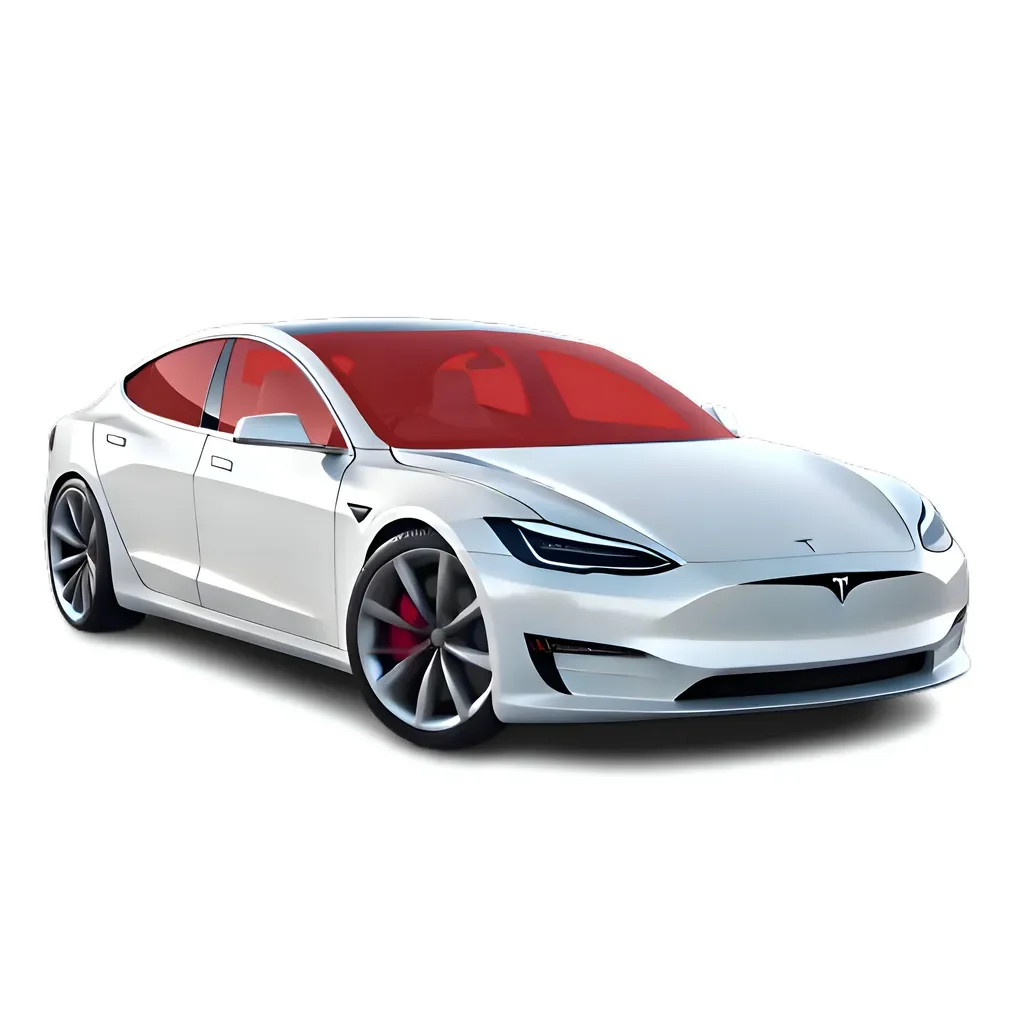
Full Car is the complete set of side and rear glass done as one job. It suits drivers who want the whole cabin finished together rather than in stages.
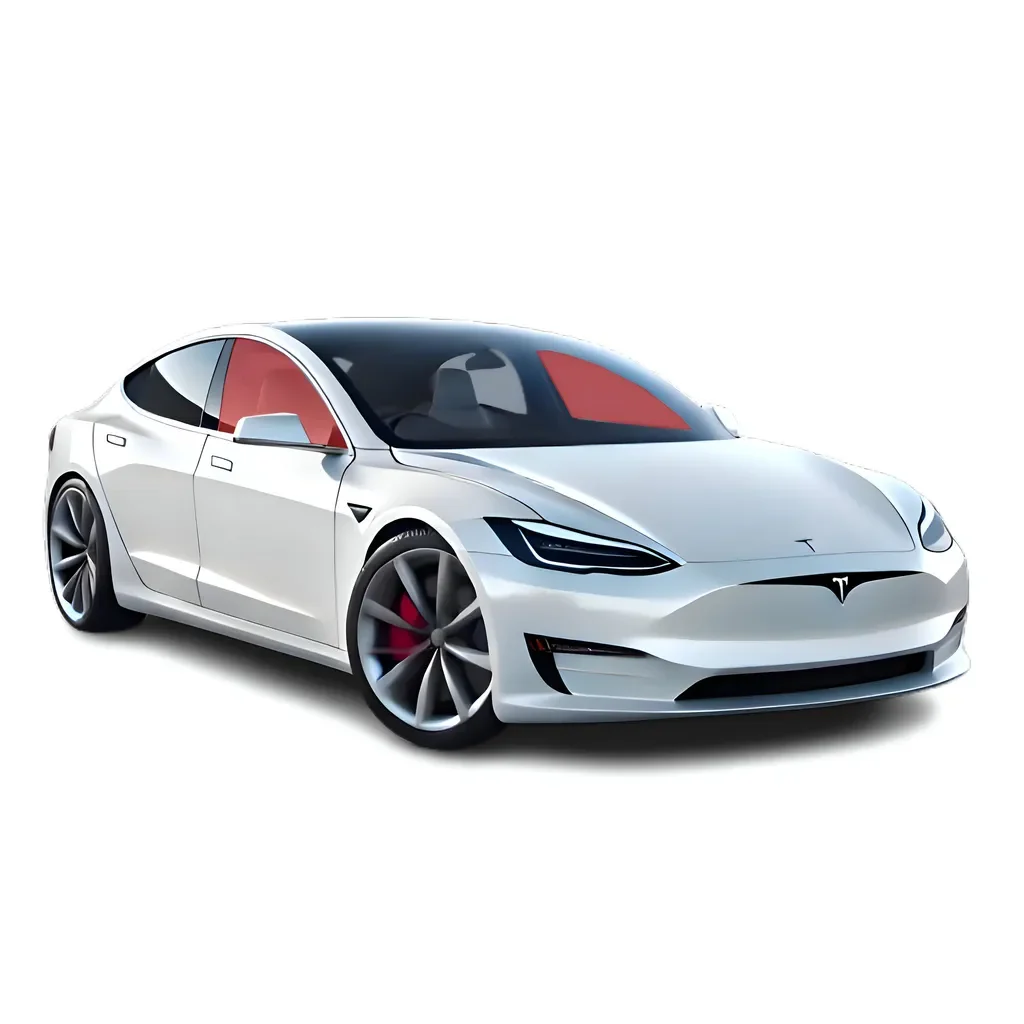
This is the smallest side-glass package, aimed at drivers who want to start with the windows nearest them or need to match tint already on the back half of the car.

Sides & Back adds the rest of the glass behind the front doors. It suits drivers finishing a set after a front-windows job, or anyone who wants the back of the cabin tinted first.

Full Windshield is for drivers asking about the entire windshield rather than a top band. Because South Carolina sets rules for windshield tint, this package starts with a conversation about your vehicle, not a set shade.
Black Bear installs three Autobahn lines, ranging from a dyed everyday film to a three-layer ceramic. Two measures help you compare them. VLT, or visible light transmission, is the percentage of visible light that passes through the glass and film together, so a lower number looks darker. TSER is the total solar energy a film rejects.
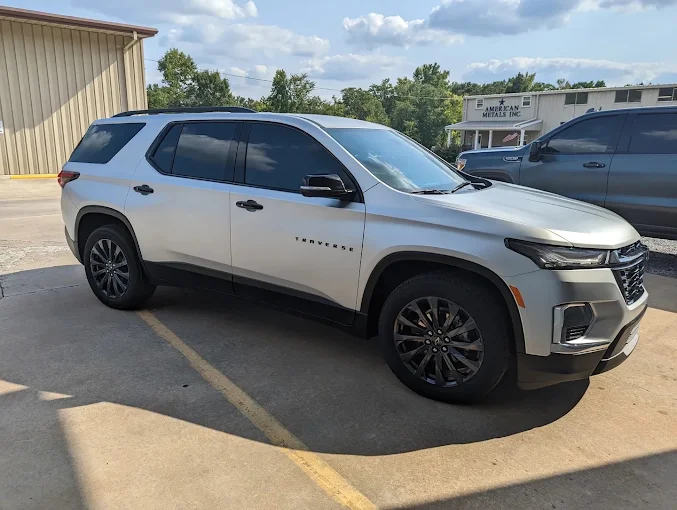
Autobahn Black is the everyday line for drivers whose priority is a dark, dyed look on the glass. It is the entry point in the range, and the maker places the two ceramic films above it in its performance tiers, so compare TSER before you settle on it.
Shades from 5% to 70% VLT
BEST FOR: Drivers who want a dark dyed film for looks and everyday UV protection.
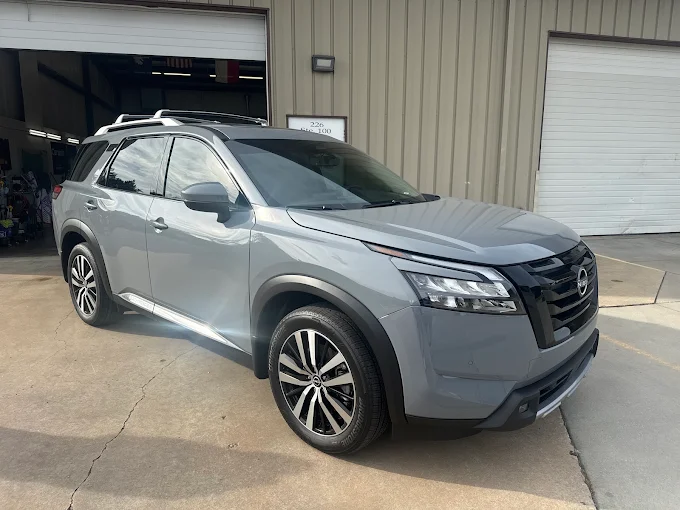
Drivers who want a dark black look backed by ceramic performance will find Black Ceramic in the middle of the range, a step up from the dyed everyday film and below i3 on the maker’s published TSER and infrared readings, so the choice comes down to how much heat performance you want from a black film.
BEST FOR: Drivers who want a black ceramic film that sits between the dyed line and i3.
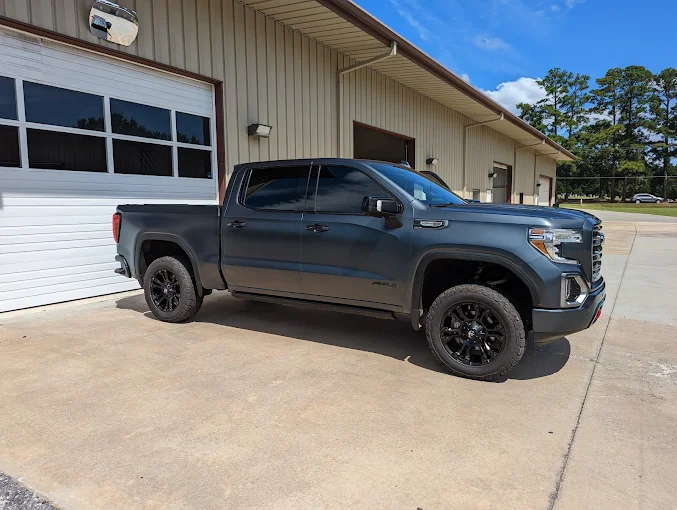
For drivers who want the highest total solar energy rejection of the three lines we install, i3 sits at the top. It also has the only published shade chart of the three, and the table below shows how the readings move from the lightest shade to the darkest.
BEST FOR: Drivers who want the most solar energy rejection and a choice of seven shades.
Shade (VLT) | TSER | Glare reduction |
5% | 71% | 95% |
15% | 68% | 89% |
22% | 66% | 79% |
33% | 62% | 59% |
40% | 60% | 50% |
56% | 56% | 38% |
67% | 50% | 27% |
These are the film’s own readings from the maker. Glare reduction is the share of bright light a shade cuts. The finished window reading also includes the factory glass, and South Carolina’s limits are in the law section.
Compare the three lines against how you use your car, and the team will narrow the choice for you. For a wider look at what we install, see our auto window tinting page.
Owner Bryan Cobb brings more than 20 years of automotive industry experience across North and South Carolina. His background helps guide film selection, vehicle assessments and recommendations based on your driving needs.
Certified installers handle each tinting job with attention to film selection, glass preparation and precise application. Our team works with Autobahn films to help achieve a clean finish suited to your vehicle.
Booking a tint appointment is straightforward through the website's online tool. You can also call (704) 870-4338 to discuss film choices, shade preferences and coverage options before selecting an appointment time.
An optional Comprehensive Warranty is listed on the window tinting service page. Ask for the written terms before booking to understand what the coverage includes and how it applies to the Autobahn film selected for your vehicle.
Monday
8 AM–5 PM
Tuesday
8 AM–5 PM
Wednesday
8 AM–5 PM
Thursday
8 AM–5 PM
Friday
8 AM–5 PM
Saturday
9 AM–2 PM
Sunday
Closed
A conversation at the shop settles the plan: which glass is being tinted, which Autobahn line goes on it and how dark to go for your particular windows. You leave with a clear scope before any film is cut, and with your questions answered.
Each window is cleaned, then wetted with slip solution, a soapy water mix that lets the film float into position. The installer works a hard card across the glass and wipes it with lint-free towels, because dust contamination trapped under film stays visible as a speck once it dries.
Each piece of film is cut to the outline of your vehicle's windows, including the curve of a rear window, before it goes anywhere near the glass. Getting the shape right first means less correction once the film is wet and in position.
The installer positions the film on the wet glass, uses a heat gun to shrink it to curved panes, then drives slip solution and trapped air out with a squeegee. Edges are trimmed and checked for edge lifting, where a corner starts to pull away from the glass and can spread.
Before handover, the installer checks every window under good light for specks and edges that have not seated. You can then ask how to treat the film while it settles, since the right guidance depends on the film and the conditions.
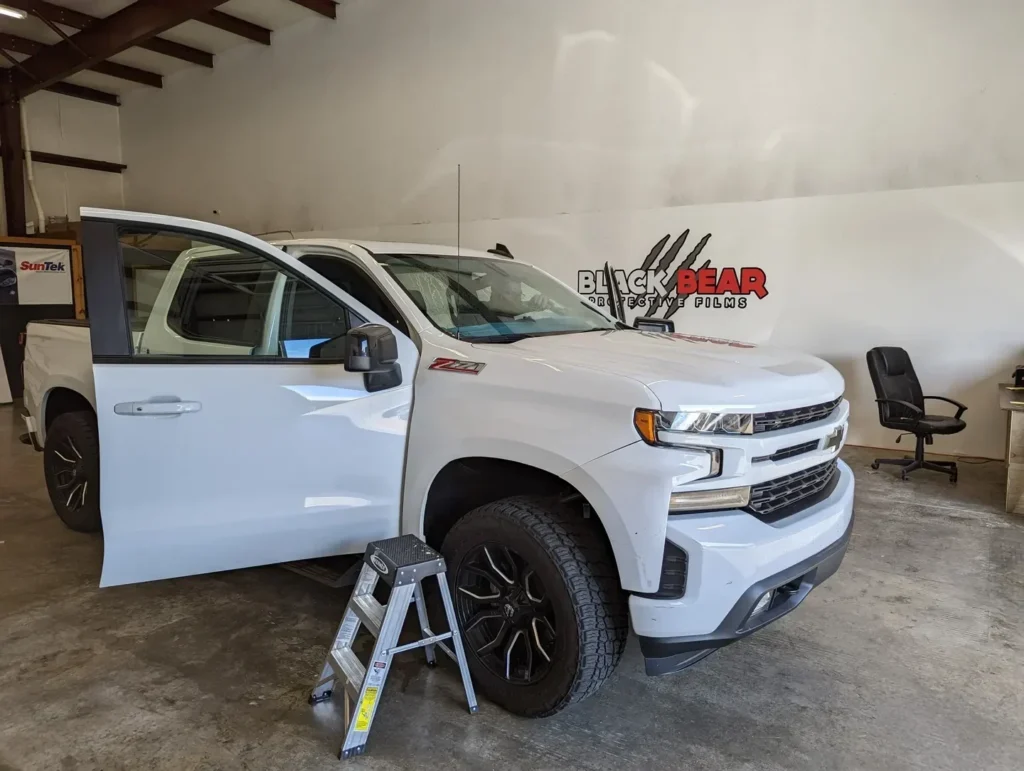
A tinted car in Indian Land begins with choosing a day. Pick a time that fits your week through our online booking tool, and the team takes it from there, from a first look at your glass through to the finished windows.
South Carolina Code §56-5-5015 sets limits on aftermarket window tint. The key requirement for most passenger cars is at least 27% combined visible light transmission (VLT), measured through the film and factory glass together.
Window | South Carolina Requirement |
Windshield | Nonreflective tint strip along the top, no lower than the AS-1 line. |
Front Side Windows | At least 27% combined VLT. |
Rear Side Windows | At least 27% combined VLT, with vehicle-class exemptions. |
Rear Window | At least 27% combined VLT, with both outside mirrors required. |
Additional rules: Tint must be nonreflective and cannot be red, yellow or amber. Vehicles with qualifying multipurpose passenger classifications may be exempt from the VLT limit on windows behind the driver. This exemption also differs for pickup trucks.
South Carolina also requires a compliance certificate on each window with aftermarket tint. Confirm the requirements for your vehicle before choosing a shade.
At Black Bear Protective Films, we protect and enhance vehicles with paint protection film, ceramic coating, window tinting. We specialize in Tesla, Porsche, BMW, Mercedes, Ford, Rivian, and luxury vehicles, ensuring top-tier care with premium products. Trust our certified experts to deliver lasting protection, superior aesthetics, and precision craftsmanship across North and South Carolina.


Tell us which car and which windows you have in mind, and the team will follow up with the film and coverage that fit. A quote request is all it takes to get that conversation going.
Three things move the price: the number of windows, the size and shape of your vehicle’s glass, and the film line and shade you choose. Those differ from car to car, so the shop gives you a figure through a quote and not a fixed list. Use the quote form to start one.
Factory privacy glass and aftermarket window film are different products, and neither stands in for the other. Privacy glass is darkened when the glass is made, while film is added afterward and carries its own published ratings, such as TSER. Ask the shop how your SUV’s glass compares with the film options.
Tinting happens in person at our shop, so there is no home or office visit to arrange and the car comes to us. Calling ahead with your vehicle details helps the team plan the job, and a booking can be made through the site or by phone.
The limit depends on the window: South Carolina treats the windshield, front side windows, back side windows and rear window separately, so there is no single answer for the whole car. The law table on this page lists each limit, and the shop can help you choose a shade for your glass.
Mirrored film is not allowed in South Carolina. The code calls for nonreflective tint and bars red, yellow and amber, so those colors are out. Within those limits, the shop can show you which Autobahn film and shade suit your vehicle, and which look you can get.


