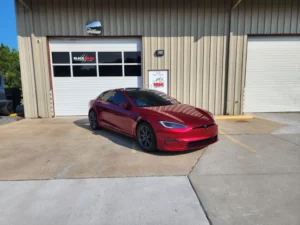
The best paint protection film for Tesla owners depends on the model, finish, and which panels get the most exposure. Tesla paint shows chips and swirl marks quickly, and film acts as a physical barrier against both.
At Black Bear Protective Films in Indian Land, SC, Tesla owners often ask which coverage and finish suit them best. This guide covers durability, model-by-model coverage, sensor zones, installation, and care for owners across York County and the Charlotte area. Carolina sun, spring pollen, and highway debris add their own wear, so each section keeps local driving in mind.
Does a Tesla Really Need Paint Protection Film?
Factory paint on a Tesla chips like any modern finish, but large smooth panels make every defect easy to see. A long hood and a low front end collect road debris at highway speed. Film absorbs that impact before the clear coat does, which keeps the original paint intact underneath.
Tesla’s own owner’s manual tells drivers to remove bird droppings, tree resin, and road salt quickly. It also advises repairing chips and scratches promptly. Those instructions describe the damage film is designed to slow.
Film does not make paint invincible, because deep gouges and heavy impacts can still mark a vehicle. Protection reduces the damage from everyday driving instead of eliminating it.
What Makes a Tesla Protective Film Durable?
Durability comes from construction, so Tesla owners should compare these five traits before choosing any film for a daily driver.
- TPU base: thermoplastic polyurethane is more flexible and absorbs impact better than basic vinyl, which scuffs more easily.
- Protective topcoat: a clear surface layer resists staining and yellowing from sun exposure and road grime over several seasons.
- Self-healing: heat from sunlight or warm water lets light scratches fade, though deep cuts do not heal.
- Adhesive quality: a good adhesive holds edges flat during daily driving and lifts cleanly at removal.
- Written warranty: coverage terms reveal more about durability than any claimed lifespan printed on a brochure.
Owners comparing options at Black Bear Protective Films can ask for the film’s data sheet and warranty terms in writing. Many online guides cite seven to ten years of life, but few explain how that figure was tested.
Gloss, Matte, Satin, or Color: Which Finish Fits a Tesla?
Finish changes both the look of the car and the skill that the installation demands.
- Clear gloss: keeps the factory appearance, which suits owners who want protection that stays invisible from every angle.
- Matte and satin: give panels a flat, modern look and call for an installer experienced with these films.
- Color film: changes the vehicle’s color while protecting the paint, though seams become more noticeable.
Seeing samples in direct light helps owners judge the finish before committing to a full panel layout. A finish chosen from a small swatch indoors can look quite different on a large hood outside.
Which Coverage Fits Each Tesla Model?
Coverage should follow how each model is driven and where its paint takes damage. Drivers can review Tesla paint protection film options by model before choosing a package.
Model 3
Protect first: the front bumper, hood edge, and mirror caps. Watch for: the low front lip and rocker panels, which collect tire-thrown debris.
Model Y
Protect first: the full hood and front fenders, since the large flat hood shows every chip. Watch for: the rear cargo edge and door cup areas, which take daily wear.
Model S
Protect first: the front fascia and hood. Watch for: door handles and door edges, which see frequent contact.
Model X
Protect first: the front end and the edges of the falcon-wing doors. Watch for: lower doors and rocker panels near the road.
Cybertruck
Protect first: the film choice itself, since published guides describe a bare stainless steel body without a clear coat. Watch for: coating compatibility, because a ceramic product needs to be made for bare metal.
Packages at Black Bear Protective Films range from partial front to full body. Any model can start small and expand later.
What Do Partial Front, Full Front, and Full Body Packages Cover?
Package names vary between shops, so owners should confirm exactly which panels each one includes. The ladder below describes the usual progression.
- Partial front: the bumper, part of the hood, mirror caps, and headlights, which take the first debris hits.
- Full front: adds the entire hood and both front fenders for continuous protection across the whole front end.
- Rocker panel add-on: extends coverage along the lower doors, where tires throw gravel and road grit.
- Full body: covers every painted panel, which suits long ownership, frequent highway miles, and high-value paint.
Starting with the front end is a practical choice for many commuters. Panels can be added later, though matching the film on a later visit calls for the same product.
Where Do Cameras, Sensors, and Charge Ports Complicate an Install?
Tesla vehicles carry exterior cameras and, on some builds, parking sensors that must stay clear. Installers trim film around those openings instead of covering them. Tesla’s manual also asks owners to keep exterior cameras free of obstructions.
| What the Installer Handles | What the Owner Checks | Zone |
| Film is trimmed to leave lens openings clear | Clean edges with no film over the lens | Front and side cameras |
| Film stops short of the camera housing | No haze or lifted film nearby | Rear camera |
| Sensor faces are left uncovered | Sensors stay visible and unobstructed | Parking sensors, if equipped |
| Film follows the door edge and seam | Door closes smoothly with no lifting | Charge port door |
| Edges are wrapped or trimmed with care | Handles extend and retract normally | Door handles |
| High-wear edges receive film | Edges stay flat after a few washes | Frunk and trunk edges |
Installed correctly, film should not interfere with Autopilot or Full Self-Driving, since the camera openings stay uncovered. Owners should ask the installer to explain how each lens and sensor zone is handled.
Does PPF or Ceramic Coating Come First on a Tesla?
Film goes on first, and ceramic coating can go over it afterward. Film stops stone chips, while the coating adds slickness and easier cleaning over the film surface.
Panels without film can take a coating directly. That helps water bead and washes go faster, but a coating does not stop stone chips.
Published guides advise a coating made for bare stainless steel on a Cybertruck. Products made for clear coat can bond poorly. Owners should ask the installer to confirm that the coating suits the surface beneath it.
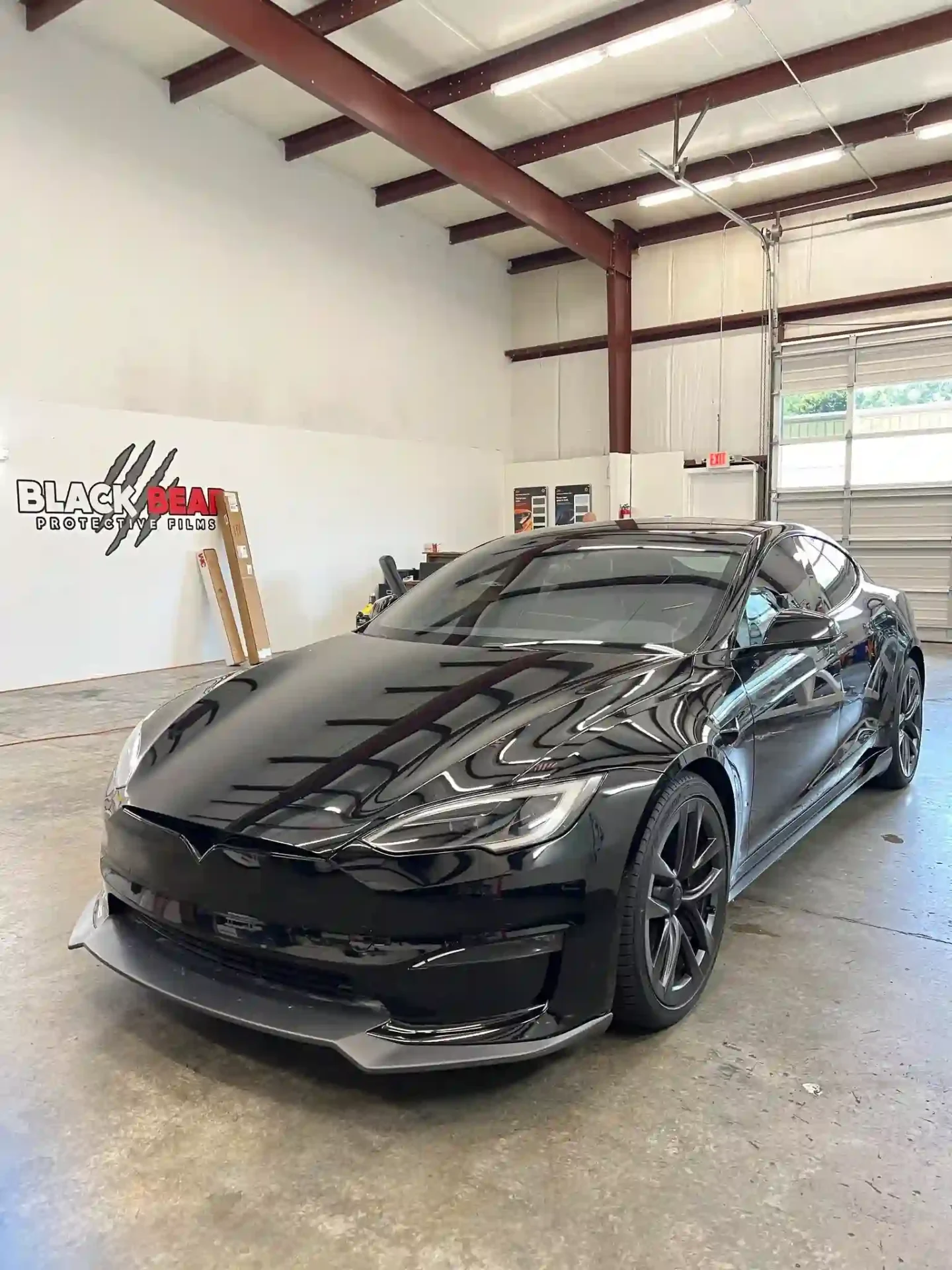
How Should a Tesla Be Prepared for Film?
Film hides nothing underneath, so preparation decides how the finished result looks once the installation is complete.
- Wash and decontaminate the paint to remove rail dust and transport residue that new vehicles can carry.
- Inspect every panel under direct light for chips, swirl marks, and deep scratches.
- Correct light swirl marks, since film follows the surface beneath it.
- Confirm the coverage plan, including edges, camera zones, and door cups.
- Allow the shop enough time for cutting, installation, and curing before pickup.
Chips and swirls under film stay visible, so paint correction is usually the first step on a used Tesla. A brand new vehicle still needs decontamination, since transport and dealer handling can leave residue on the paint.
What Happens During a Tesla PPF Installation?
Installation follows a repeatable sequence, and each stage affects how the finished film looks. The shop inspects the paint, washes and decontaminates each panel, and corrects light defects before any film is cut.
Film is then shaped to the panel, using either pre-cut patterns or careful hand trimming. The installer applies a slip solution, positions the film, and squeegees out moisture. Edges are wrapped where the design allows.
Curing follows installation, and the installer explains any wash restrictions at pickup. Cloudy patches or small moisture pockets can appear early and usually settle as the film cures.
How Long Does Tesla PPF Last in Carolina Weather?
Lifespan depends on film quality, installation, and care, so the manufacturer’s written warranty is the best guide. Many guides quote five to ten years, though real results vary with local conditions.
Summer sun, spring pollen, and debris on I-77 and I-485 all wear on exposed paint. Rinsing pollen and bug residue early helps, and warm water or sunlight helps self-healing films recover from light marks.
Warranty terms should be requested in writing, including what is covered, for how long, and which company backs the claim.
How Should Tesla Film Be Washed and Cared For?
Care rules are straightforward, and they protect both the film and the paint underneath it.
- Hand wash with a mild shampoo and a clean microfiber cloth, out of direct sunlight.
- Use touchless automatic washes only, with Car Wash Mode turned on.
- Keep pressure-washer jets away from film edges and parking sensors.
- Rinse off bird droppings, tree resin, and road salt quickly.
- Follow the installer’s instructions for the first wash.
Tesla’s owner’s manual cleaning page covers hand washing, touchless washes, and sensor care. Film benefits from the same habits.
Can Tesla Film Be Removed or Replaced Later?
Film can be removed, and a skilled installer lifts it with heat while cleaning any leftover adhesive from the paint. Professional removal is recommended because rough handling can mark the surface beneath.
Paint condition matters at removal. Film over repainted or damaged paint can pull loose clear coat. That is one reason to inspect the finish first.
A damaged panel can usually be re-filmed on its own. Replacement is easier when the original film product and pattern are recorded on the invoice.
Which Mistakes Cost Tesla Owners the Most?
Five common beliefs lead owners toward poor results.
Myth: Film can cover every camera and sensor.
Fact: Lens and sensor zones need clean cutouts, so installer skill matters.
Myth: The cheapest quote is the best deal.
Fact: Unusually low quotes often skip paint preparation, careful edge work, or meaningful warranty terms.
Myth: Ceramic coating replaces film.
Fact: Coating improves cleaning and gloss but does not stop stone chips.
Myth: Every film performs the same.
Fact: Construction and warranty terms vary widely, so documents matter.
Myth: Film repairs existing damage.
Fact: Chips and swirl marks beneath the film remain visible after installation.
How Can an Owner Choose a Tesla PPF Installer?
A short list of questions helps separate careful installation shops from rushed ones.
- Has the shop installed film on this model before, and can it show examples?
- Which panels and edges does the quote list by name?
- How are cameras, sensors, and the charge port area handled?
- Is paint correction included or priced separately?
- What does the written warranty cover, and who backs it?
- How long will the vehicle stay at the shop?
A quote that fails several of these checks deserves further questions before any deposit is paid.
What Is the Best Paint Protection Film Setup for a Tesla?
The best setup pairs durable film with coverage matched to the model, clean cutouts around cameras, and a written warranty. Careful preparation and gentle washing protect the result through years of Carolina driving.
Owners weighing budget can read the paint protection film cost guide for South Carolina before booking. Black Bear Protective Films will review the paint, the model, and the film options for each Tesla.
Frequently Asked Questions
How much does paint protection film cost for a Tesla?
Cost depends on the model, coverage level, film, and preparation. Front-end packages cost less than full body, and larger vehicles like the Model X or Cybertruck need more film. Request a written quote that lists each panel, the film, and the warranty so competing offers compare fairly.
Will paint protection film interfere with Autopilot or Full Self-Driving?
Film should not interfere when it is installed correctly, because the installer trims around camera lenses and leaves sensor faces uncovered. Ask the shop how it handles each camera and sensor zone before booking, and check the edges for clean cutouts after installation is finished.
Can paint protection film go over chips and swirl marks on a Tesla?
Film can be applied over light imperfections, but it does not hide them, so chips and swirls stay visible underneath. Light paint correction is usually the first step on a used Tesla. Deep scratches and rock chips may need repair before the film goes on, so ask for an inspection first.
How long does paint protection film last on a Tesla in the Carolinas?
Many guides quote five to ten years, and premium films often carry longer warranties. Real results depend on film quality, installation, and care. Carolina sun, pollen, and highway debris add wear, so ask for the warranty terms in writing before choosing any film for the vehicle.
Should paint protection film or ceramic coating go on a Tesla first?
Film goes on first, and ceramic coating can be applied over compatible film afterward. Film stops stone chips, while the coating adds easier cleaning and water beading. Ask the installer to confirm the film and coating work together before booking both services for the same vehicle.
Does the Cybertruck need paint protection film?
Published guides describe the Cybertruck’s stainless steel body as having no clear coat, so many owners add film for chip and scratch protection. Coatings for bare metal are a separate choice. Ask the installer which film and finish suit a stainless steel panel before you book the work.