
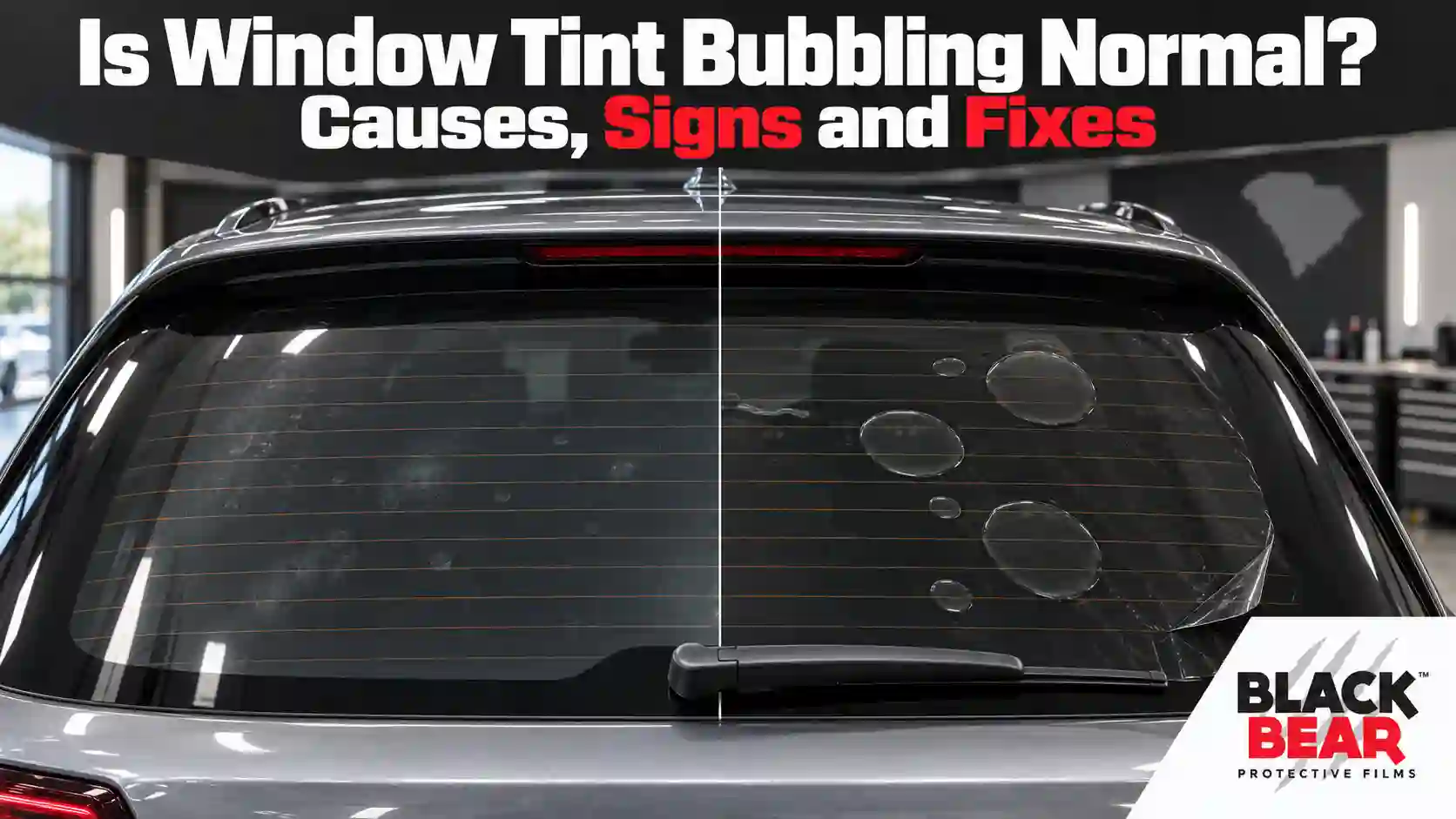
Fresh tint from professional auto window tinting in Indian Land, SC can show a few small bubbles right after installation. Window tint bubbles or peels for one of two common reasons: curing moisture or a real defect. Black Bear Protective Films sees both situations weekly across Indian Land, Fort Mill, and the greater Charlotte area.
Is It Normal for New Window Tint to Bubble?
Yes, some bubbling is normal on brand new tint. Installers use a slip solution to position the film, and small pockets of water get trapped underneath.
These water bubbles look cloudy or hazy, not clear. They sit evenly across the glass instead of clustering in one spot. As the adhesive cures, the trapped moisture evaporates, and the bubbles flatten out.
Air bubbles are different. They form when dust or debris gets sealed under the film during installation. Pressing on them will not make them disappear, and that usually points to an installation issue.
How Long Do Bubbles Take to Disappear After Installation?
Most water bubbles clear within three to seven days as the film finishes bonding. Cooler weather or a heavier tint shade can stretch that window closer to two weeks. Black Bear Protective Films tells every customer to expect some haze during this stretch.
For more detail on timing, how long a tint install and cure actually take, it breaks down the full process.
Any bubble still present after 30 days rarely resolves on its own. At that point, the film has finished curing. A bubble that remains usually signals trapped debris or a spot the installer missed.
What Causes Window Tint to Bubble or Peel?
Bubbling and peeling trace back to a small set of causes. Most involve film quality, the install itself, or years of heat working against the adhesive.
Low-Quality or Cheap Dyed Film
Budget dyed films use weaker adhesives and fewer UV inhibitors than ceramic or carbon options. Dyed film that fails typically starts bubbling or discoloring within one to two years. The dye simply breaks down faster under constant UV exposure.
Poor Installation Technique
Dust or leftover cleaner residue trapped under the film creates air pockets that never work themselves out. Rushed edge trimming leaves weak spots too. An incomplete squeegee pass leaves gaps where adhesive never bonds to the glass.
Heat, UV Exposure, and Adhesive Breakdown Over Years
Even quality film eventually gives out as heat cycling and UV exposure slowly break down the adhesive bond. Bubbles that appear years after installation usually signal this natural wear, not a fresh defect. South Carolina summers speed up this timeline compared to milder climates.
Rear Defroster Lines and Concentrated Heat Areas
Rear windows run hotter than side glass because the defroster grid generates direct heat against the film. Bubbling clustered along those horizontal lines, rather than spread evenly, points to heat stress at that contact point.
Wrong Cleaning Products or Rolling Windows Down Too Soon
Ammonia-based glass cleaners break down tint adhesive from the surface down. Only ammonia-free formulas belong on tinted glass. Rolling windows down during the first few days can shift film that has not fully bonded.
Does Ceramic Window Tint Still Bubble?
Ceramic film bubbles far less often than dyed tint, but it is not immune to poor installation. The nano-ceramic particles in a film like Autobahn Black Ceramic or Ceramic i3 resist UV breakdown. This is what drives most long-term bubbling in cheaper films.
For this reason, Black Bear Protective Films installs Autobahn ceramic lines on most Indian Land vehicles. Ceramic film commonly performs well for ten or more years under Carolina sun. For a full side-by-side breakdown, see how ceramic film compares with dyed window tint.
Ceramic film can still bubble if installed over dirty glass or applied by an inexperienced installer. Physical damage from a sharp object causes the same result. Installation skill still matters as much as the material.
Warning Signs Your Window Tint Is Failing
A few visual and functional clues separate normal curing from tint that needs attention.
Visual Clues From Outside the Vehicle
Watch for bubbles that have not flattened after several weeks. Edges lifting away from the frame are another red flag. So is a purple or brownish tint color where the film used to look neutral.
Curved rear windshields tend to show problems first. Curved glass puts more stress on the adhesive than flat side glass does.
Signs You’ll Notice From Inside the Cabin
Reduced visibility through hazy sections signals trouble, as does a rougher texture along the film. Gaps forming at the corners mean the film is separating from the glass. In South Carolina, where inspectors check legal tint darkness, visibly failing film can draw extra scrutiny.

Can Bubbled or Peeling Tint Be Repaired, or Does It Need Replacing?
Small, isolated bubbles sometimes respond to a careful reheat and resqueegee from a trained installer. This only works on film that is otherwise in good shape. Widespread bubbling or discoloration almost always means the adhesive has failed over a larger area than what shows.
DIY fixes like pin-pricking bubbles or using a hair dryer typically cause more damage. Piercing the film lets in moisture and voids most manufacturer warranties. Once adhesive breaks down in one section, the surrounding film usually follows.
Full removal and reinstallation is the reliable fix for tint that has actually failed. Current pricing and film-tier options appear in the current window tinting cost guide for the Charlotte area. It also compares repeated cheap-film redos against one ceramic install.
Does the Manufacturer Warranty Cover This?
Autobahn film carries a lifetime manufacturer warranty against manufacturing defects like premature bubbling or peeling. The shop also offers an optional $75 comprehensive warranty covering broader failure scenarios. Warranty claims typically need the original installation invoice and photos of the affected area.
How to Prevent Window Tint From Bubbling or Peeling
Prevention starts before installation and continues for years afterward.
Choosing the Right Film and Installer From the Start
Ceramic or carbon film costs more upfront than dyed film. It resists the UV breakdown that causes most early bubbling. Pairing quality film with an experienced installer cuts installation-error bubbling almost entirely.
Following Proper Curing Guidelines
Keeping windows up for three to five days after installation protects the adhesive as it cures. Skipping automatic car washes and parking in shade help too. Suction cup mounts, like phone holders, should stay off tinted glass during this period.
Long-Term Maintenance Habits
Ammonia-free glass cleaner and a soft microfiber cloth are all tinted glass needs. A full breakdown of ongoing care, including long-term window tint maintenance tips, covers seasonal upkeep for Carolina heat and humidity.
Skipping At-Home Bubble or Edge Sealing Attempts
Online searches often turn up glue pens or edge sealant marketed to fix lifting tint corners at home. These products rarely bond as well as the original film adhesive and can trap more moisture underneath. A quick professional fix costs far less than repairing a botched DIY seal job.
Normal Curing vs Failing Tint: Quick Comparison
| Symptom | What It Usually Means | Action Needed |
| Small cloudy bubbles, first 1-2 weeks | Trapped moisture still curing | None, monitor |
| Bubbles that flatten under light pressure | Water vapor evaporating through film | None |
| Bubbles appearing after 1+ years of use | Adhesive breaking down from heat and UV | Schedule an inspection |
| Bubbles clustered on rear defroster lines | Heat from the defroster grid softening adhesive | Professional inspection |
| Bubbles paired with purple or brown color | Dye degrading in a lower-quality dyed film | Replacement likely needed |
| Lifting or curling at window edges | Adhesive failure or poor edge trim | Replacement likely needed |
Care standards from the International Window Film Association back up this same pattern. Film lifespan depends heavily on film quality, glass exposure, and post-installation cleaning habits.
Conclusion
Most bubbles on brand new window tint are ordinary moisture working its way out. This happens during the first one to two weeks and resolves on its own. Bubbles that show up months or years later, or come with peeling and discoloration, point to a real film failure.
Black Bear Protective Films has walked Indian Land, Fort Mill, and Charlotte-area drivers through this exact decision for years. The complete 2026 window tint guide is a solid next read for anyone comparing film types. It works well before a first install or a redo.
Frequently Asked Questions
Why does my brand new window tint have small bubbles in it already?
New tint often traps small pockets of the water-based slip solution used during installation, and that is completely normal. These clear bubbles usually flatten within three to seven days as the adhesive finishes curing on the glass. Bubbles lasting past 30 days need a professional check.
Is it normal for tint to look hazy or bubbly during the first week?
Yes, haze and small bubbles are normal during the first one to two weeks after a fresh window tint installation on any vehicle. Clarity improves daily as trapped moisture slowly escapes through the film itself. Cloudiness lasting past 30 days needs a professional inspection.
Why is window tint bubbling on my car years after it was installed?
Years-later bubbling on an older vehicle usually means heat and UV exposure have finally broken down the film’s adhesive after long-term daily use. Dyed film often fails within one to two years under Carolina sun. Ceramic film typically lasts ten or more years before this starts happening.
Why does the tint on my rear window keep bubbling near the defroster lines?
Defroster grids generate direct heat against the film every time the rear defroster runs, especially in colder months. That concentrated heat softens the adhesive faster along those exact horizontal lines. Side windows without defrosters rarely show this same localized bubbling pattern.
Does ceramic window tint bubble less than regular dyed tint?
Ceramic film resists heat and UV breakdown far better than dyed film, so it bubbles less often across its full working lifespan on a vehicle. Poor installation or physical damage can still cause bubbles on any film type, ceramic included. Installer skill matters just as much as film quality.
Can a bubbled or peeling window tint be repaired instead of replaced?
Small isolated bubbles sometimes respond well to a professional reheat and resqueegee if the surrounding film is otherwise sound and undamaged. Widespread bubbling, peeling edges, or noticeable discoloration usually means full removal and fresh reinstallation is the more reliable long-term fix.


